
HERZ as a problem solver
Renovation made easy
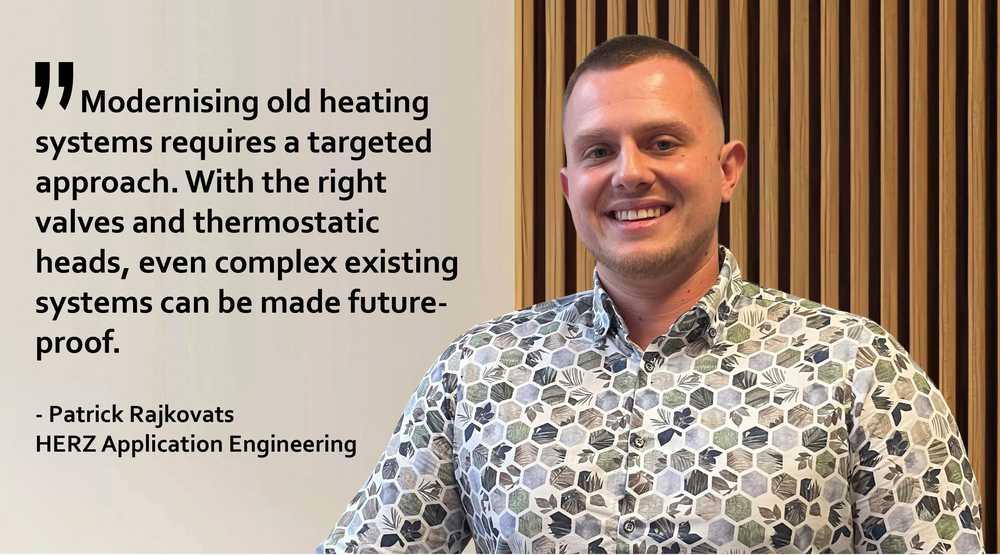
Many heating systems in existing buildings have been in operation for decades. Valve bodies, pipes, hand wheels and thermostatic heads often date back to a time when different technical and energy requirements applied. Nevertheless, targeted measures can achieve a great deal even with such systems. Even small interventions – such as fitting thermostats to existing radiators – make it possible to adapt older systems to today's requirements. Controls become more precise, energy use more efficient and operating costs can be significantly reduced, as projects that have already been implemented demonstrate. In an interview with HERZ News, Patrick Rajkovats explains what is important in practice and which solutions have proven themselves in existing buildings.
Results from practice:
The Natural History Museum in Vienna provides an impressive example of the successful modernisation of an existing system. In just one heating season, the use of HERZ thermostatic heads and thermostatic valves alone saved 440,000 kWh of heating energy – equivalent to a CO₂ reduction of 58 tonnes. Due to public accessibility, vandal-proof HERZCULES thermostatic heads were used here, which also protect against unauthorised operation.
The renovation project in Komárno, Slovakia, also demonstrates the impact on a large scale: within three years, 92 properties with almost 4.000 flats, totalling around 250.000 m², were renovated. The radiators were equipped with HERZ thermostatic heads and thermostatic valves, and the heating circuits were fitted with fittings for hydraulic balancing. The entire investment amount was recouped within two years of the investment. The energy savings also speak for themselves: after the renovation, annual savings of 8.024.000 kWh were achieved. This corresponds to a successful energy saving of 27 % per year. At the end of the case study, a total energy saving of 31.122.000 kWh was recorded.
Modernise existing systems quickly and safely
Installers face the challenge of adapting an old system to new requirements – and doing so as quickly as possible. "The first decision depends on the type of system: single-pipe or double-pipe systems. Both systems have different hydraulic properties and therefore require different approaches to modernisation", says Patrick Rajkovats, HERZ Application Engineering. Once this has been determined, it is possible to clearly define which measures are appropriate and how the system can be operated more efficiently without great effort.
Renovation of two-pipe systems
Unlike single-pipe systems, in two-pipe systems each radiator is supplied in parallel. The supply and return pipes are separate, the temperature drop along the pipe is significantly lower and the hydraulic conditions are more stable overall. "Two-pipe systems generally offer better conditions for precise control", explains Patrick Rajkovats, adding, "To exploit this potential, it is important to have the right valve and controlled flow limitation." HERZ relies on dynamic thermostatic valves and presettable solutions for this purpose:
HERZ TS-98-V
The TS-98-V thermostatic valve enables precise presetting of the flow rate at the radiator, thereby supporting hydraulic balancing in two-pipe systems. The defined flow limitation allows the volume flow per radiator to be adjusted specifically – an important step towards even heat distribution and efficient system control. The different designs cover typical installation scenarios.
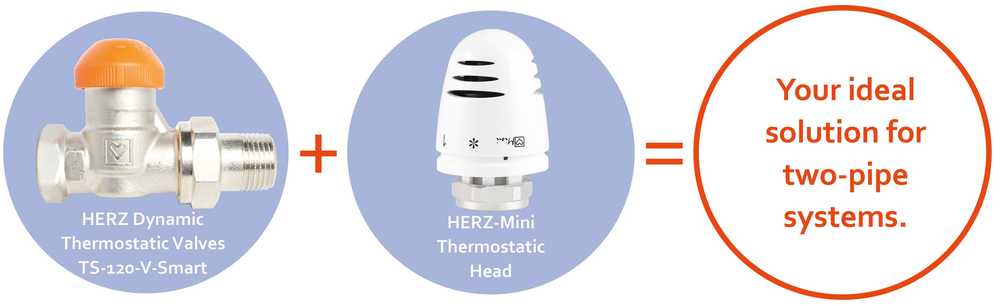
HERZ Dynamic Thermostatic Valve TS-120-V-Smart:
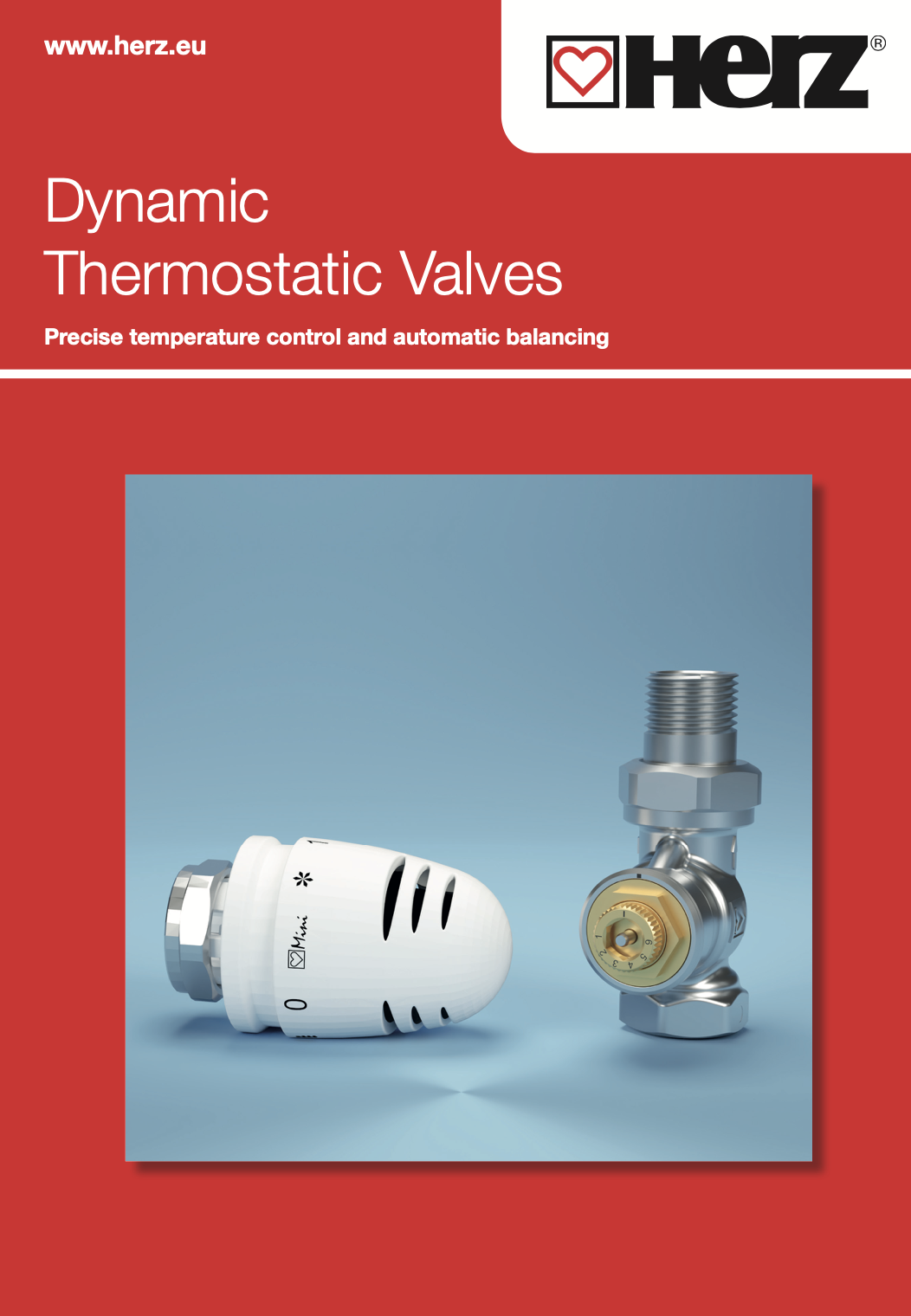
HERZ Dynamic Thermostatic Valve TS-120-V-Smart combines the functions of a classic thermostatic valve with a differential pressure regulator in a single housing. The integrated differential pressure regulator enables the dynamic thermostatic valve to maintain a constant flow rate at the radiator even when pressure conditions change. Pressure fluctuations in the system, for example due to the opening or closing of other radiators, are automatically compensated for, so that each radiator always has the required amount of water available.
Combined with a thermostatic head, the radiators can be individually controlled according to actual demand – for greater comfort, efficient heating and noticeable energy savings.
Renovation of single-pipe systems
In single-pipe systems, the heating water circulates in series through the individual radiators. This causes it to cool down after each radiator. "Single-pipe systems tend to suffer from significant pressure imbalances. Thermostatic valves with higher flow rates offer a solution here", emphasises Mr. Rajkovats. HERZ offers specially engineered valve solutions that meet the hydraulic requirements of single-pipe systems while enabling efficient thermostatic control:
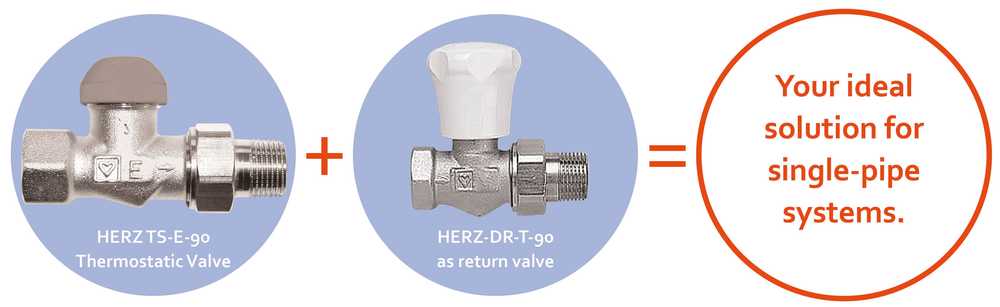
HERZ TS‑90‑E:
The HERZ TS-90-E thermostatic valve has been specifically developed for single-pipe systems and features a significantly higher flow rate. While standard ½" thermostatic valves typically have a kVs value of around 1.1, the TS-90-E achieves a kVs value of approximately 2.0 to 2.3, ensuring the required low flow resistance.
Depending on the installation requirements, the valve is available in straight, angled, and special angled configurations.
The proven DR-T-90 or GP valves, each in combination with a manual balancing valve, are suitable as corresponding return valves.
HERZ TS‑E:
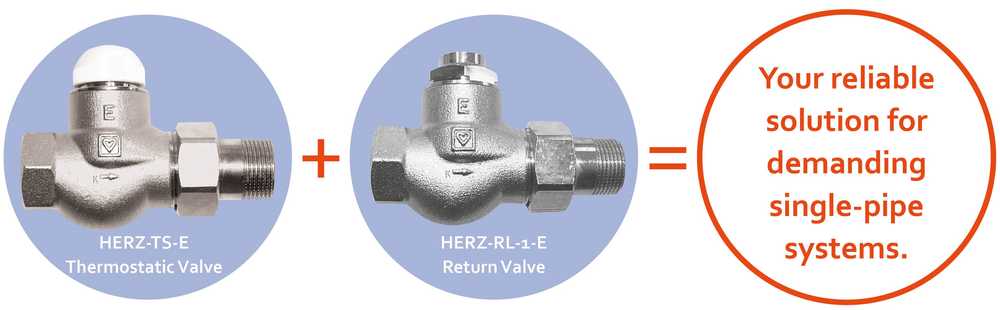
The HERZ TS-E thermostatic valve is ideal for highly problematic single-pipe systems or gravity-fed systems. This valve offers approximately five times the flow rate of a standard valve, with a kVs value of around 5.1. This solution is complemented by the HERZ RL-1-E return valve, which is designed for maximum flow in single-pipe and gravity systems.
"These combinations enable effective control and a significant increase in efficiency even under difficult conditions – without any major changes to the existing pipe network", says Mr. Rajkovats. HERZ also offers the necessary compression set for installing the valves on calibrated mild steel or copper pipes.
Special solutions for critical installation situations
In particularly critical installations – for example, with sensitive floor coverings such as tiles and marble or with pipe systems at risk of corrosion – direct replacement of the entire valve is often difficult or risky. Depending on the product, year of manufacture and issue, various solutions are possible:
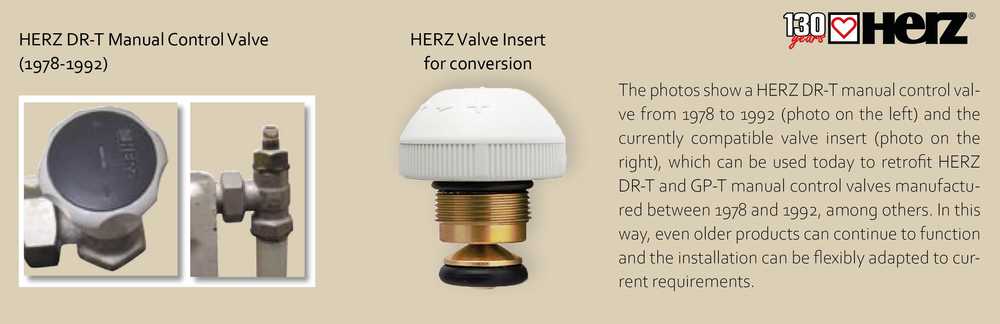
If the valve is dripping, for example, the seal can simply be replaced. With HERZ, this is even possible under pressure for some valves manufactured before 1965, such as HERZ DR valves.
If the valve spindle is stuck and can no longer be moved, the function of the valve can be restored simply by replacing the upper insert, even in manual control valves. Especially in models such as the HERZ DR-T-90 from 1992 onwards, the upper insert can even be replaced under pressure, which saves a considerable amount of time. HERZ also offers the necessary replacement tool for upper inserts: HERZ Changefix.
"Replacing the upper insert with a thermostatic insert creates the technical conditions for more efficient control", explains Patrick Rajkovats, emphasising the versatile compatibility of the HERZ product range.
Free consultation at HERZ
"Every enquiry is unique. That's precisely why we at HERZ offer both telephone and email support to assist our customers", emphasises Mr. Rajkovats. "Photos of the valve and valve insert enable us to identify the model and provide the right solution", he adds. If you have any questions, you can contact HERZ Application Engineering at any time at: awt@herz.eu
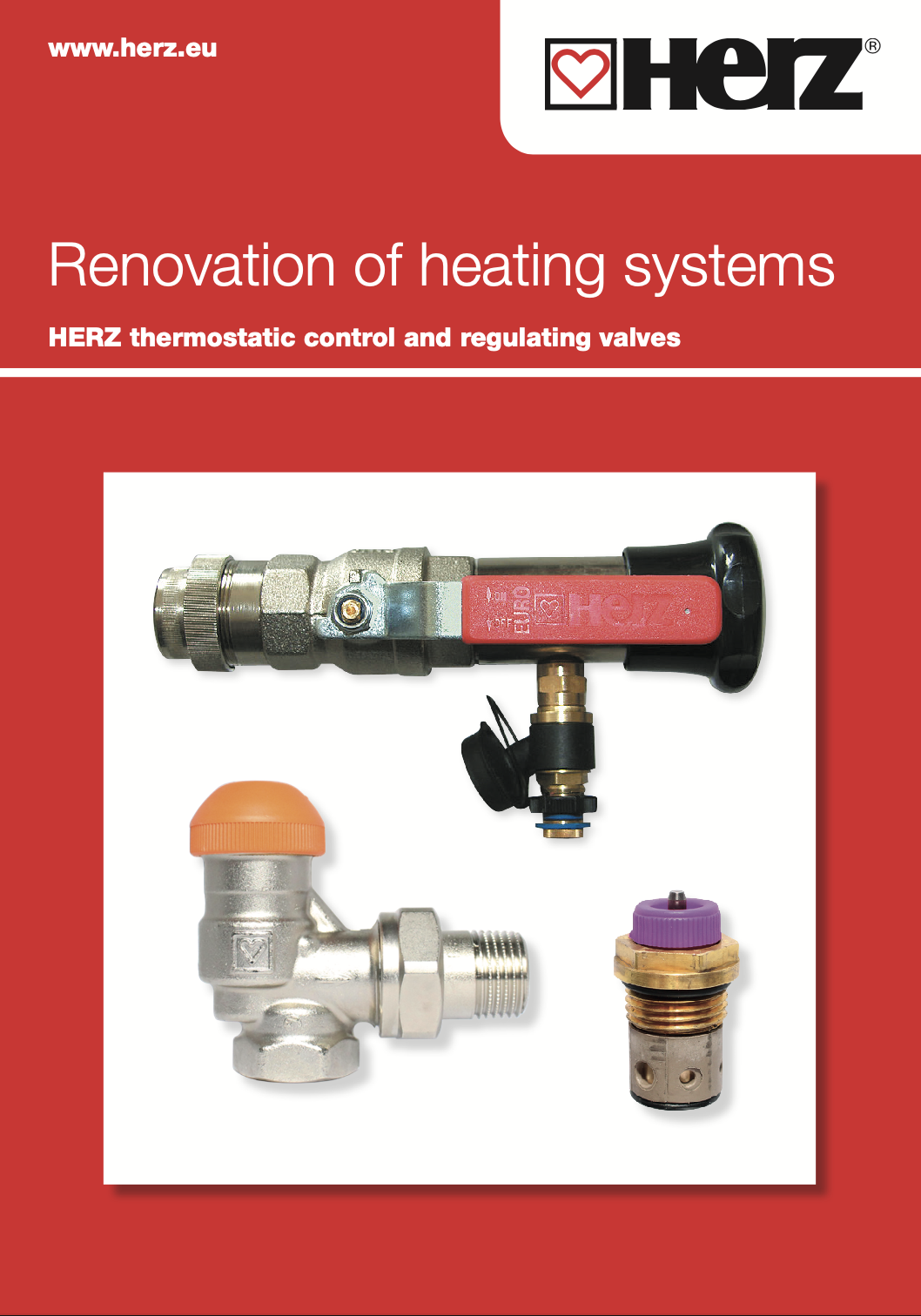
You can get a complete overview of HERZ valves from 1965 to the present day, as well as their spare parts, on our brochure Renovation of heating systems.
© 2026. HERZ