
HERZ in Poland
A report
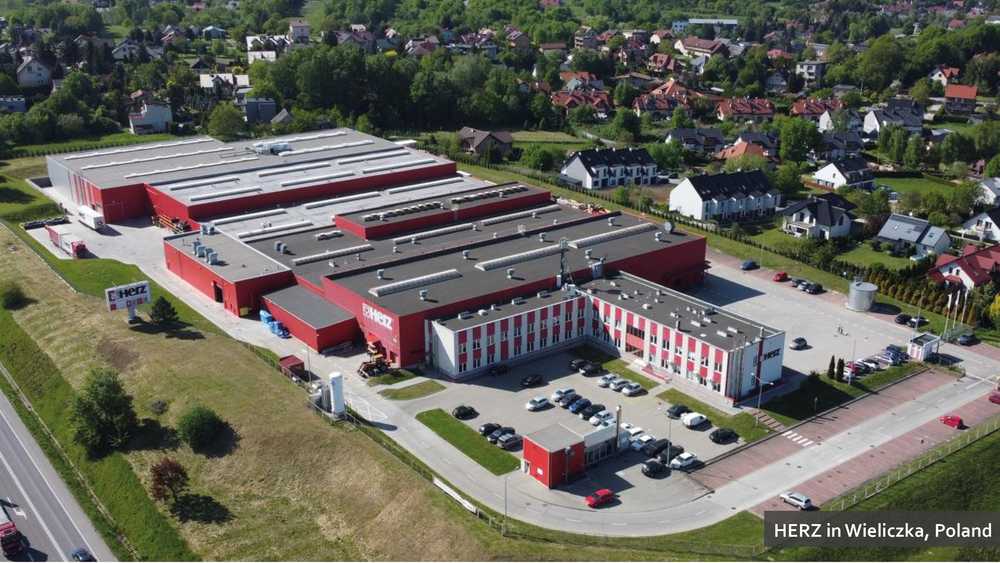
Poland is now one of Europe’s most dynamic industrial centres – yet the country’s economic development is closely linked to a history marked by upheavals and new beginnings. Continuous growth has given rise to a market characterised by fierce competition, international pressure and, at the same time, a high level of industrial expertise. It is precisely in this environment that HERZ, with its site in Wieliczka, has successfully established itself over the decades.
The disappearance of Poland from the map – Liberum Veto
There are few countries in Europe whose history is as extraordinary as that of Poland. At the end of the 18th century, the country was partitioned between Russia, Prussia and Austria and disappeared completely from the map for 123 years. The reason for this was a historical instrument within the Polish-Lithuanian Sejm – the so-called Liberum Veto, which is Latin for ‘free veto’. The Liberum Veto allowed a single member of parliament to immediately adjourn a parliamentary session or to declare decisions that had already been taken invalid by raising an objection. What began as a democratic check and balance led to extreme political paralysis, rendering the state incapable of action. This was exploited by foreign powers, particularly Russia and Prussia. They bribed Polish nobles in parliament to prevent reforms in Poland, which in turn contributed to the decline of the noble republic.
A certain parallel to this political mechanism can be seen today in the United Nations Security Council. The five permanent members – the USA, Russia, China, the United Kingdom and France – have a right of veto there. This can prevent international decisions from being taken when the interests of the major powers involved diverge.
The rise of a Kingdom
Despite foreign rule and political oppression, however, the Polish people preserved their language, culture and national identity. Following the end of the First World War, Poland returned to the map of Europe as an independent state in 1918. The decades that followed were marked by war, occupation and political upheaval, yet the country retained its identity and, after 1989, developed into one of Europe’s most dynamic economies.
The white gold
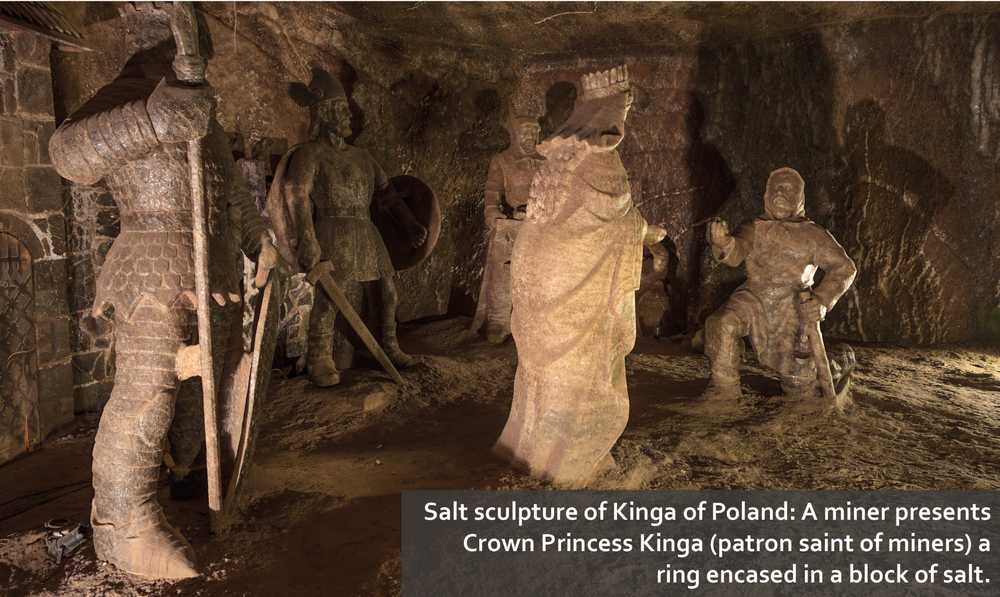
Traces of this long history can still be found in many parts of the country today. One of the best-known is Wieliczka, south-east of Krakow, whose salt mine has been closely linked to Poland’s economic development for centuries. Salt has been mined at the Wieliczka Salt Mine – one of the oldest in Europe – since the 13th century. Back then, salt was far more than just an ordinary seasoning: It was needed to preserve food and was regarded as one of the most valuable raw materials of its time. It was not for nothing that it was referred to as ‘white gold’. For centuries, the revenue from salt mining contributed significantly to the prosperity of the Kingdom of Poland.
Today, the Wieliczka Salt Mine is a UNESCO World Heritage Site and ranks among the country’s most famous attractions. Deep underground, kilometres of tunnels, underground lakes and chambers and sculptures artfully carved from salt stretch out – an impressive testament to European industrial and mining history. At the same time, they provide an extraordinary setting for cultural events, which now take place hundreds of metres below ground.
HERZ in Poland
Following Russia’s invasion of Ukraine, Poland’s geographical location and its NATO membership have made it the most important military and logistical hub for supporting Ukraine. Around 95 percent of all international military and aid shipments are handled via Rzeszów-Jasionka Airport. As a result, the country has also significantly increased its political influence in Europe. Furthermore, Poland is the largest economy in the CEE region (Central and Eastern Europe) and enjoys stable growth. This is officially confirmed by figures from the WKO. The country’s attractiveness as a business location has prompted many of HERZ’s competitors from the UK, Scandinavia and Austria to set up production facilities in Poland.
The HERZ Group has four sites in Poland. The country is one of the Group’s largest foreign markets. In addition to the three sites operated by HIRSCH Servo (a global player in the particle foam industry and a subsidiary of the HERZ Group), there is also a HERZ branch in Wieliczka, Poland, which includes a production facility. Shortly after the political and economic changes in the country, the HERZ branch was established in Poland in 1990, thereby laying the foundations for long-term growth in the Polish market. Since then, HERZ Poland has developed into an important partner for wholesalers, planners and installers.
Furthermore, HERZ Poland benefits from Poland’s strategic location at the heart of Europe and its role as a key industrial and logistics hub. In line with the company’s continuous growth, production capacity has been expanded on several occasions: In 2003, the first production hall for assembly and welding work was built. This was followed in 2008 by a further expansion to increase assembly and valve production capacity. Most recently, in 2020, the modern, automated production hall was built and all assembly activities were consolidated at a single site.
Building Services Engineering as an university subject
Krakow was once the royal city and remains to this day the cultural capital of Poland, as well as one of Europe’s most important centres of higher education. Jagiellonian University, AGH University of Science and Technology and the Krakow University of Technology attract students from both Poland and abroad. A large proportion of the region’s skilled workforce is drawn from this strong academic environment. “Building services engineering has been firmly established at universities and technical colleges in Poland for many years. That is why, in many areas, we find staff with a sound technical background – from field staff through to planning and production. This specialist knowledge is a key factor in the development of our site,” says Gerhard Glinzerer, CEO of the HERZ Group.
Production in Wieliczka – developed on the basis of our in-house process expertise
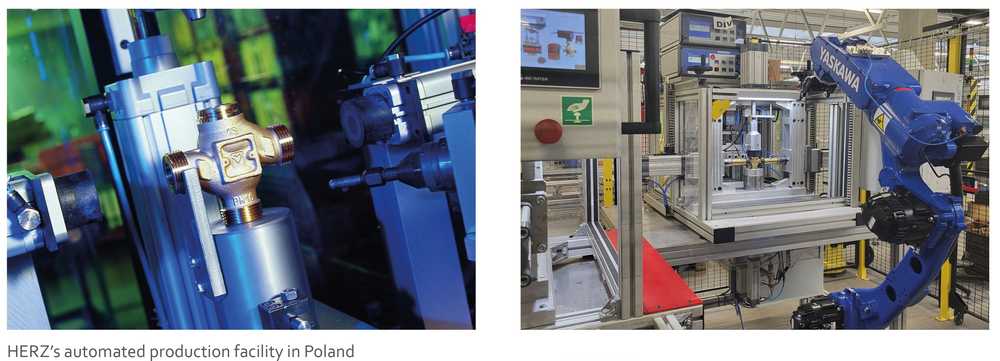
The automated production and assembly facility in Wieliczka was developed and built by HERZ’s own staff. The foundation for this is a stable workforce that has worked together for many years – and with it, a deep understanding of the products and processes that has grown over time. “We know our products. That is why the automated assembly lines – such as those for thermostatic heads – were designed by our own engineers and built by our experienced team of mechanics,” explains Grzegorz Czyżowski, Head of the Automation Department at HERZ Poland.
Here, components are assembled, tested, labelled and prepared for dispatch across two levels. Every fitting is inspected individually, rather than simply carrying out random checks. This ensures that only products meeting the high quality standards leave the factory.
What was originally developed for the company’s own production processes has quickly evolved into a separate business division: HERZ Automation now also makes its expertise available to other industrial companies.
The site also includes its own welding and painting facilities. This is where components for boiler systems from HERZ Energietechnik and BINDER Energietechnik are manufactured. Particular attention is paid to quality assurance: the welding facility is ASME-certified – an internationally recognised quality standard for the manufacture and testing of pressure-bearing components, which is of particular importance for projects in North America. The site thus meets requirements that can only be demonstrated by appropriately qualified companies worldwide.
The Polish market
The Polish market is characterised by continuous economic growth, which brings with it intense competition between international industrial manufacturers. The lack of stable protection for domestic industry is creating considerable pressure on the market. “The culture of industrial patriotism, long established in many Western European countries, is only slowly beginning to gain ground in Poland,” says Piotr Skudlarski, Managing Director of HERZ Poland.
HERZ operates in Poland as a premium European brand in the high-end market segment. “Although our products are positioned at a higher price point, their reliability and durability are proven in everyday use – particularly at a time of increasing imports from Asia,” explains Skudlarski. Last year, HERZ Poland recorded significant growth in turnover, particularly in the areas of drinking water fittings, control and regulating valves, pipes and fittings. BINDER’s boiler systems for district heating, industrial applications and public buildings have also attracted considerable interest.
Things are heating up in Poland – BINDER boilers in high demand
With more than 100 systems installed, BINDER is now one of the established suppliers of biomass boilers in Poland. For around three decades, BINDER systems have been reliably supplying heat to numerous businesses in the timber and furniture industries. At the same time, BINDER is also becoming increasingly important in the field of municipal district heating, as many towns and local authorities are gradually switching their heat generation from coal to renewable energy sources. “Biomass in a heating plant – that means independence: from the weather, from fuel prices and from whatever the world’s leaders happen to decide on any given day,” explains Piotr Skudlarski.
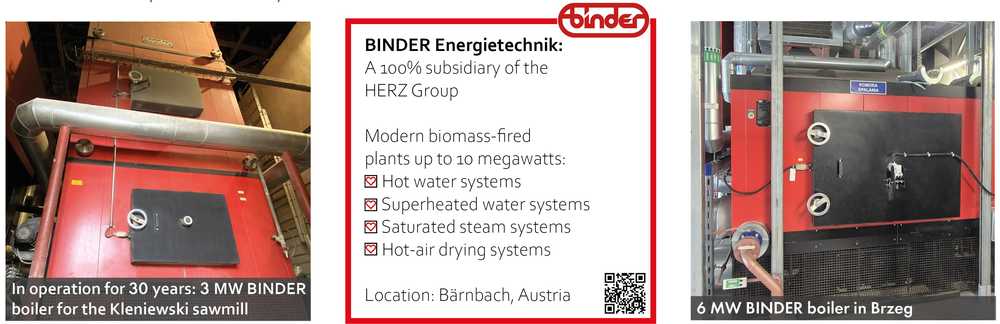
The family-run Kleniewski sawmill in Bondyrz provides an impressive example of the stability and durability of BINDER systems. The company processes around 12,000 m³ of timber annually, of which nearly 40% is fed into one of Poland’s largest drying complexes. A BINDER boiler with a capacity of 3 MW was installed at the site as early as 1996. After around twenty years of operation, the plant was relocated within the company to a second site, where it continues to operate reliably to this day. The heat supply at the main site was supplemented in parallel by a new BINDER plant for damp biomass, which has been in operation since 2016. This enables the company to utilise low-cost oak bark for energy, whilst selling higher-value sawdust and wood chips. “The boiler allows us to burn what is worth the least and sell what is worth the most,” says Waldemar Kleniewski, managing director of the sawmill.
Biomass is also growing in importance in the municipal sector. In the town of Łańcut in south-eastern Poland, with a population of just under 20,000, a BINDER boiler for wet forest biomass with a capacity of 2.5 MW was installed in 2026. Once commissioned, more than half of the district heating will come from renewable energy sources and combined heat and power generation. An electrostatic precipitator ensures low emissions.
A 6 MW BINDER biomass boiler had already been successfully commissioned in Brzeg. For many local authorities, this is not only a contribution to reducing emissions but also an economic factor: heat from biomass can be generated significantly more cheaply than heat from coal – an advantage that ultimately benefits the public.
Learn more about HIRSCH Servo
Let others wage war: thou, happy Austria, marry
Rather than waging bloody wars, the Habsburgs expanded their territory from the late 15th century onwards through skilful dynastic alliances. The historical relationship between Austria and Poland was shaped above all by this. A key starting point was the marriage of Duke Ernest the Iron – also known as the progenitor of his dynasty – of the Styrian branch of the Habsburgs to Cymburgis of Masovia, a Polish Piast princess. This marriage produced eight other children as well as Frederick III, who later became Emperor of the Holy Roman Empire and permanently consolidated the Habsburgs’ power.
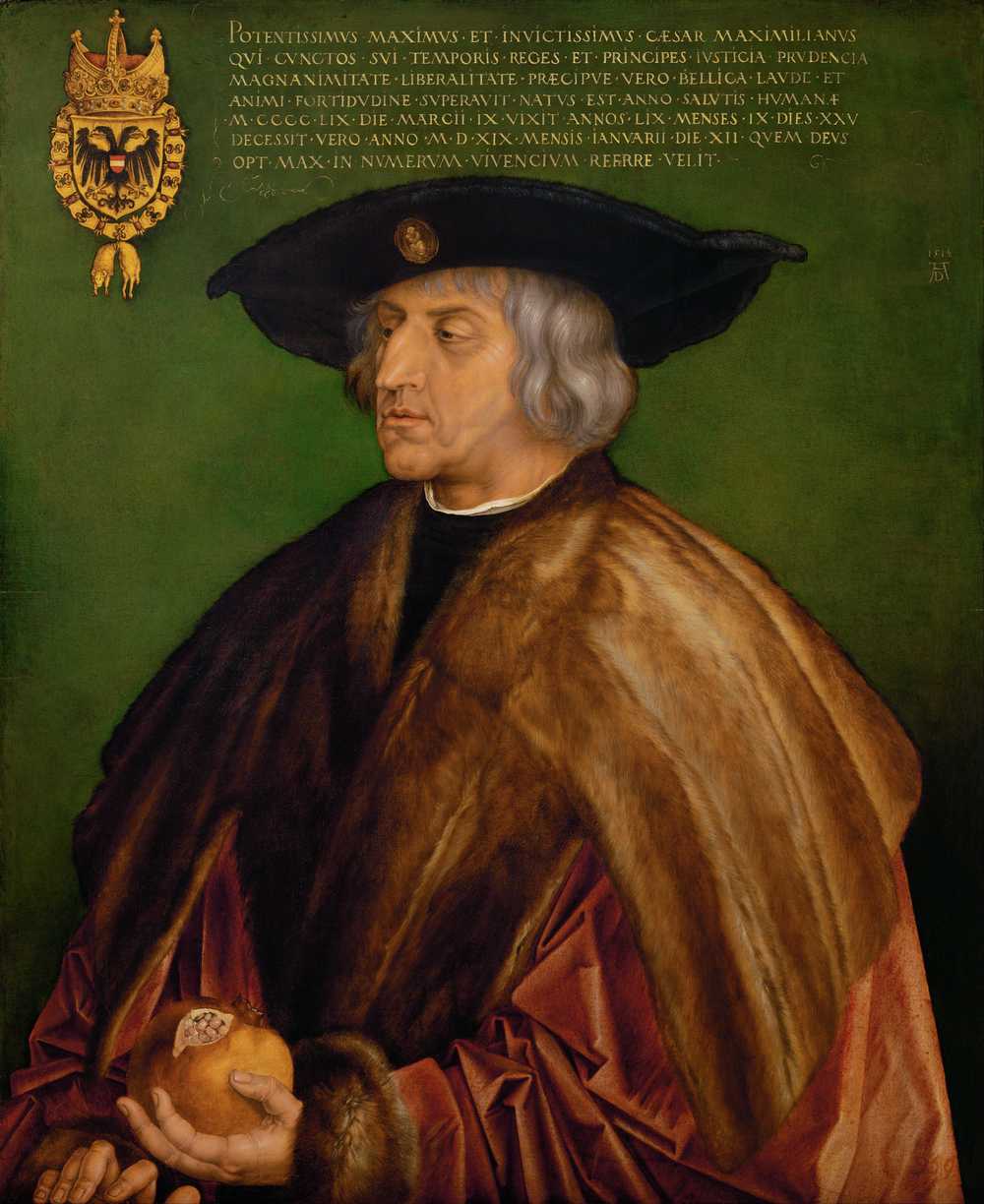
His son Maximilian I, known as the ‘last knight’, perfected this policy of marriage alliances: at the Diet of Vienna in 1515, Maximilian I and the rulers of the Jagiellonian dynasty agreed on several marriage alliances, underpinned by their shared Catholic faith. At that time, the Jagiellons ruled over Poland, Lithuania, Bohemia and Hungary and were among the most powerful dynasties in Europe. When King Louis II of Bohemia and Hungary fell in the Battle of Mohács against the Ottomans in 1526, leaving no heir, the male line of the Jagiellons in his region died out. As a result of the marriage treaties concluded previously, large parts of his realm passed to the Habsburgs.
This led to a lasting shift in the centre of power in Central Europe and the House of Habsburg was able to significantly expand its position as a major European power.
© 2026. HERZ